 The
shaft marking guide is used to mark the orientation (rotation) of the
shaft in the bearings, particularly for marking the direction of the
spine or NBP. The marking guide in prior models of the NeuFinder were
mounted to the rotator board. This presented a problem, in that any
change or variation in the distance from the rotator board to the shaft
introduced a potential error in marking the top center of the shaft.
The
shaft marking guide is used to mark the orientation (rotation) of the
shaft in the bearings, particularly for marking the direction of the
spine or NBP. The marking guide in prior models of the NeuFinder were
mounted to the rotator board. This presented a problem, in that any
change or variation in the distance from the rotator board to the shaft
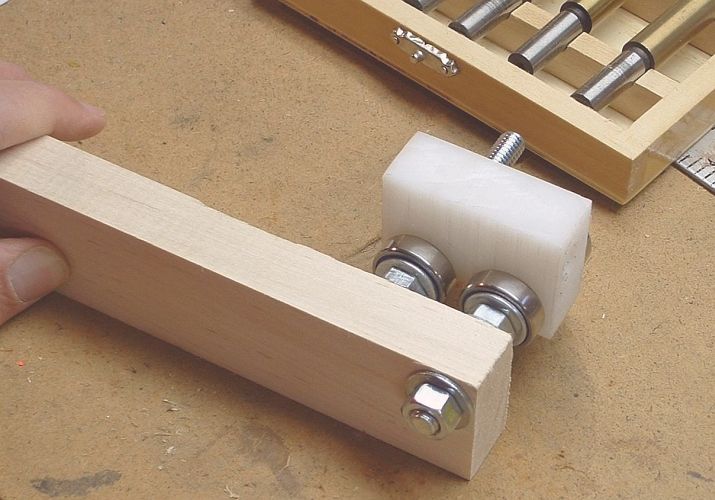
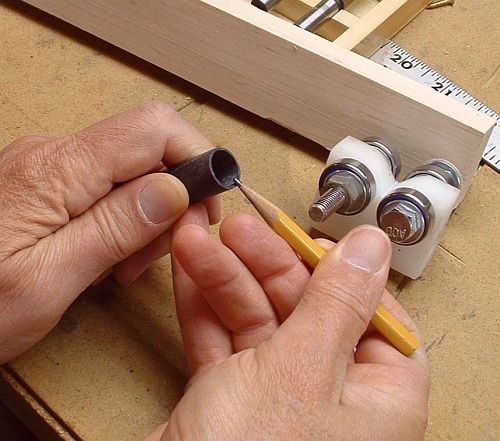
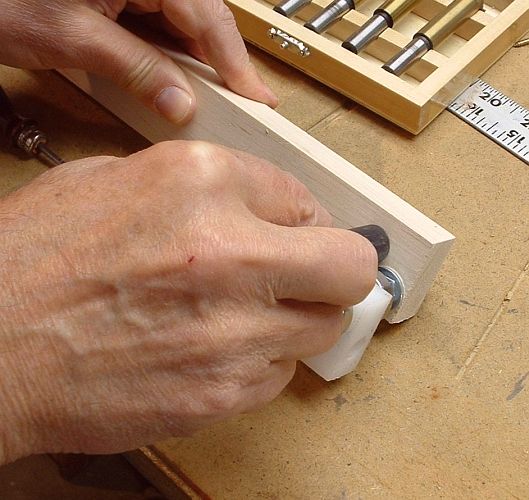
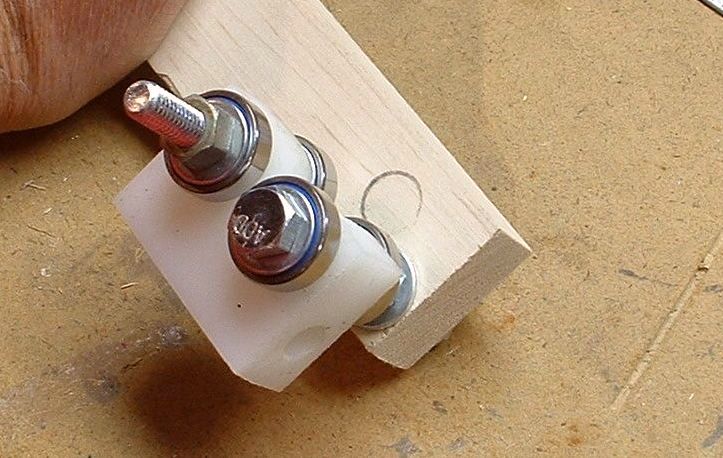
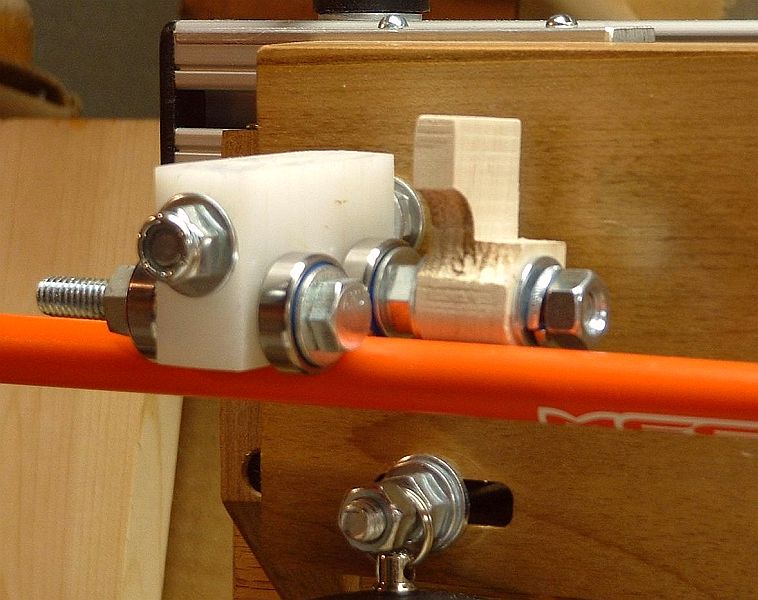
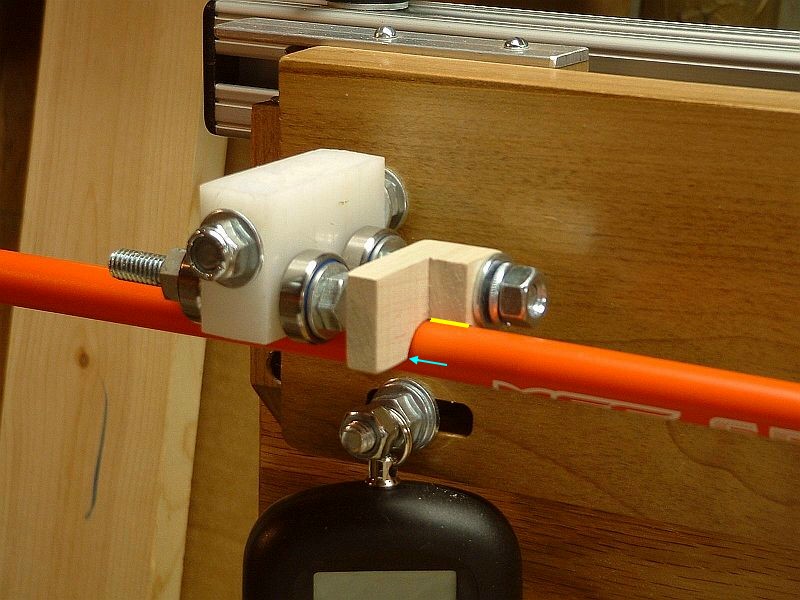
introduced a potential error in marking the top center of the shaft.In the NF4, the marking guide is mounted on the rear bearing assembly, so its relation to the shaft is fixed. Here are a couple of pictures how that works. In the one on the left, the marking guide is open, away from the shaft. On the right, it is ready for business. In that picture, the edge highlighted in yellow is the guide for marking the top center. Another edge, pointed to by the blue arrow, can be used for a mark 90 degrees away.
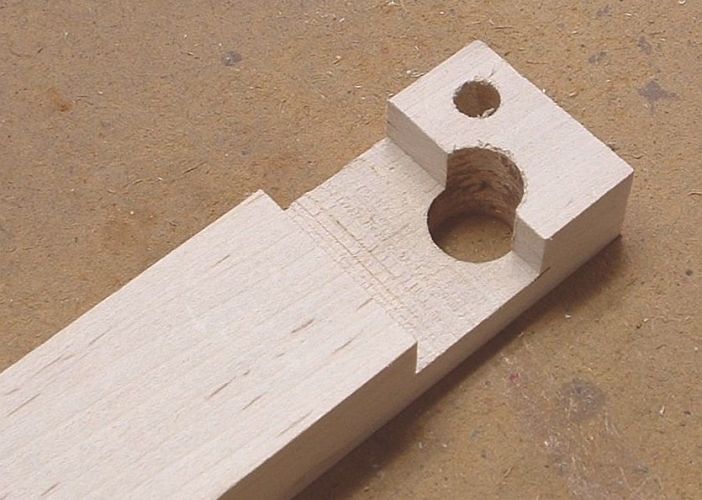
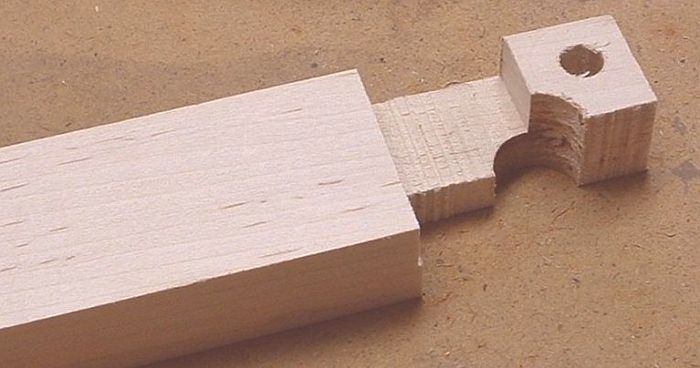
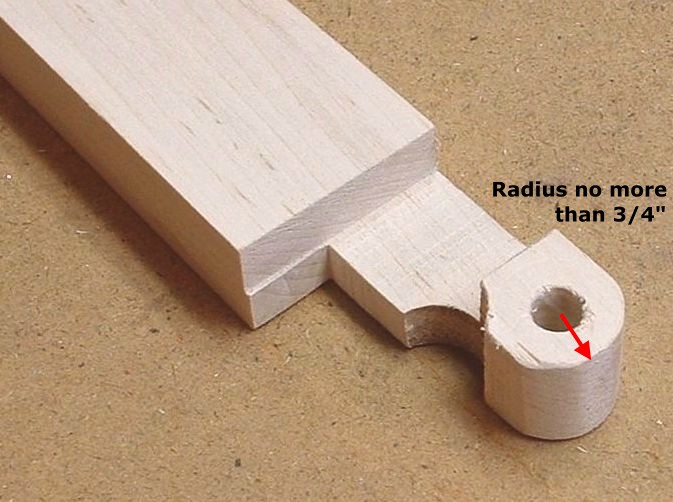
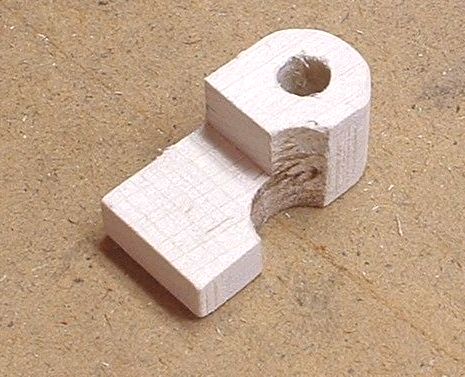
 The
shaft-marking guide is a unique part that must be fashioned to fit
the individual NF4 it is being built for. The reason for that is
because it is placed over the inside bearing bolt in your rear bearing
arm and must rotate down over an installed shaft during use and
therefore require very tight tolerances. Because the bearing arms
are hard to make that precisely, the marking guide must be custom-fit
to the rear bearing assembly on which it will be mounted. The critical
dimensions are highlighted in yellow on the excerpt from the plans at
the right. They are:
The
shaft-marking guide is a unique part that must be fashioned to fit
the individual NF4 it is being built for. The reason for that is
because it is placed over the inside bearing bolt in your rear bearing
arm and must rotate down over an installed shaft during use and
therefore require very tight tolerances. Because the bearing arms
are hard to make that precisely, the marking guide must be custom-fit
to the rear bearing assembly on which it will be mounted. The critical
dimensions are highlighted in yellow on the excerpt from the plans at
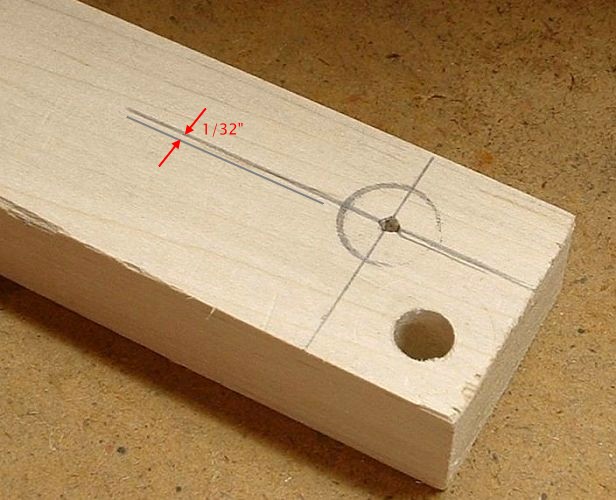
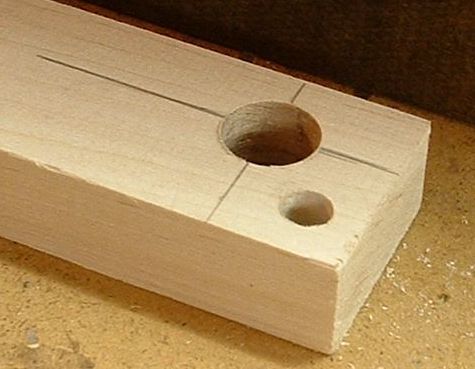
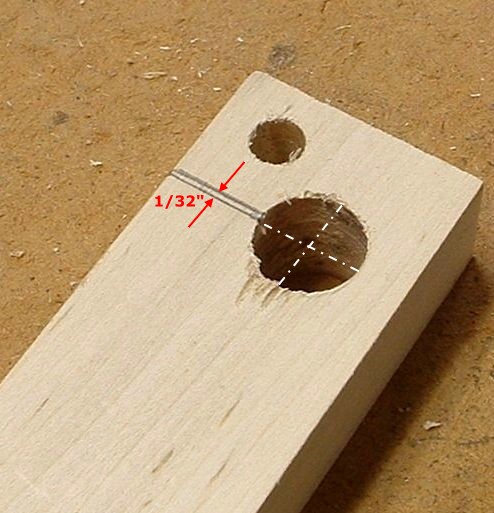
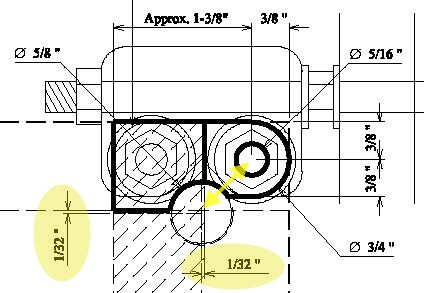
the right. They are:- The exact spacing and direction between the bearing bolt hole and the hole for the shaft.
- The
positions of the edges used for marking (of course), which are offset
1/32" from the centerlines of the shaft hole. This is to make room for
the width of a marker tip.